
The Complete Online Safety & Wellbeing Curriculum
A platform your students log into — comic stories with native narration, scenario quizzes and badges, plus a teacher dashboard that needs no training. In English and Arabic.
Why Online Safety & Wellbeing Education Can't Be Optional
Sources: Common Sense Media, 2025 Census; WHO/Europe, 2024; UNICEF U-Report (170,000 young people, 30 countries).
Schools lack a structured, age-appropriate online safety and digital wellbeing curriculum. Teachers aren't cyber safety experts. And traditional internet safety lectures don't build healthy tech habits. That's exactly the gap Volvedu fills.
Learn. Practice. Evolve.
A structured three-phase approach that builds real online safety and digital wellbeing competence — not just awareness.
Learn
Self-paced comic lessons with built-in voice narration. Students move through panels at their own speed — no rushing through videos. Early readers listen, older students practice reading.
Practice
Scenario-based quizzes and challenges — with voice support for younger students — reinforce each lesson through age-adapted question formats.
Evolve
Students earn badges and XP as they progress, working towards a flexible weekly goal — driving sustained engagement and measurable classroom participation.
14 Online Safety & Digital Citizenship Topics
A comprehensive internet safety and digital wellbeing curriculum — from passwords and privacy to cyberbullying prevention, healthy screen time habits, and critical thinking.
Passwords & Security
Creating strong passwords and keeping accounts safe from unauthorized access.
Personal Information
What counts as personal info, who can see it, and how to protect it online.
Online Strangers
Recognizing risks when interacting with people you don't know online.
Scams & Tricks
Spotting fake messages, phishing attempts, and websites designed to deceive.
Digital World Basics
Understanding how the internet works and building safe, balanced online habits from the start.
Coming soonCyberbullying & Kindness
Identifying bullying behavior online, how to respond, and fostering kindness and empathy in digital spaces.
Safe Communication
Communicating safely through messages, chats, and social platforms.
Coming soonDevice Safety
Taking care of devices, understanding permissions, and keeping software up to date.
Digital Footprint
Understanding that online actions leave traces and how to manage your digital reputation.
Getting Help
Knowing when and how to ask a trusted adult for help with online situations.
Critical Thinking
Evaluating what's real online: spotting fake news, manipulated images, and unreliable sources.
Coming soonIn-App Purchases
Understanding real money in apps and games, and making smart choices before buying.
Coming soonScreen Time & Digital Balance
Building healthy habits around device use, managing screen time, and maintaining a balanced digital and offline life.
AI Assistants
Understanding how AI tools work, what they can and can't do, and using them responsibly for positive digital wellbeing.
The student’s view
Comic stories, scenario quizzes and a progress path students want to finish — all in the browser, on the devices you already have.
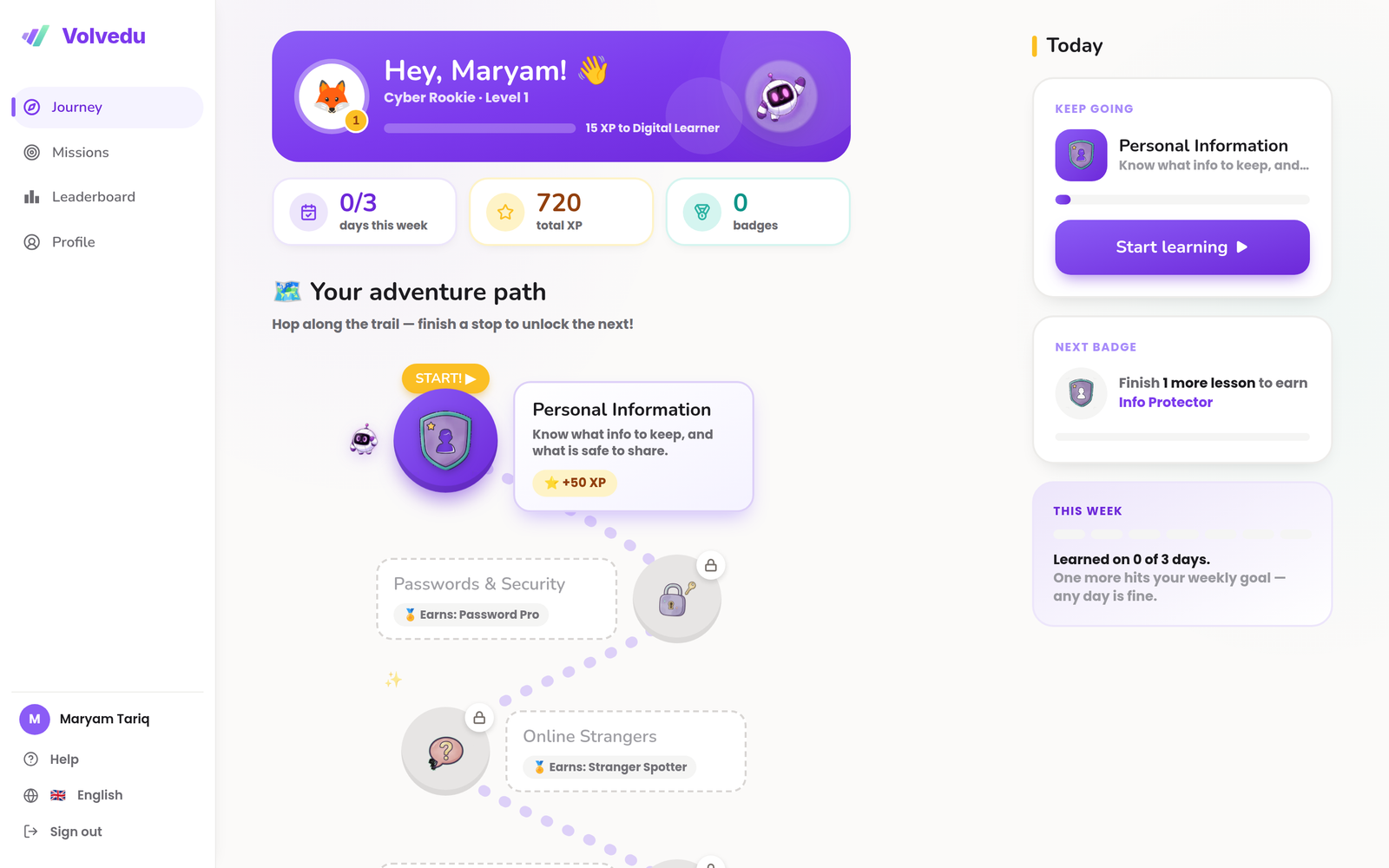
Learning Journey
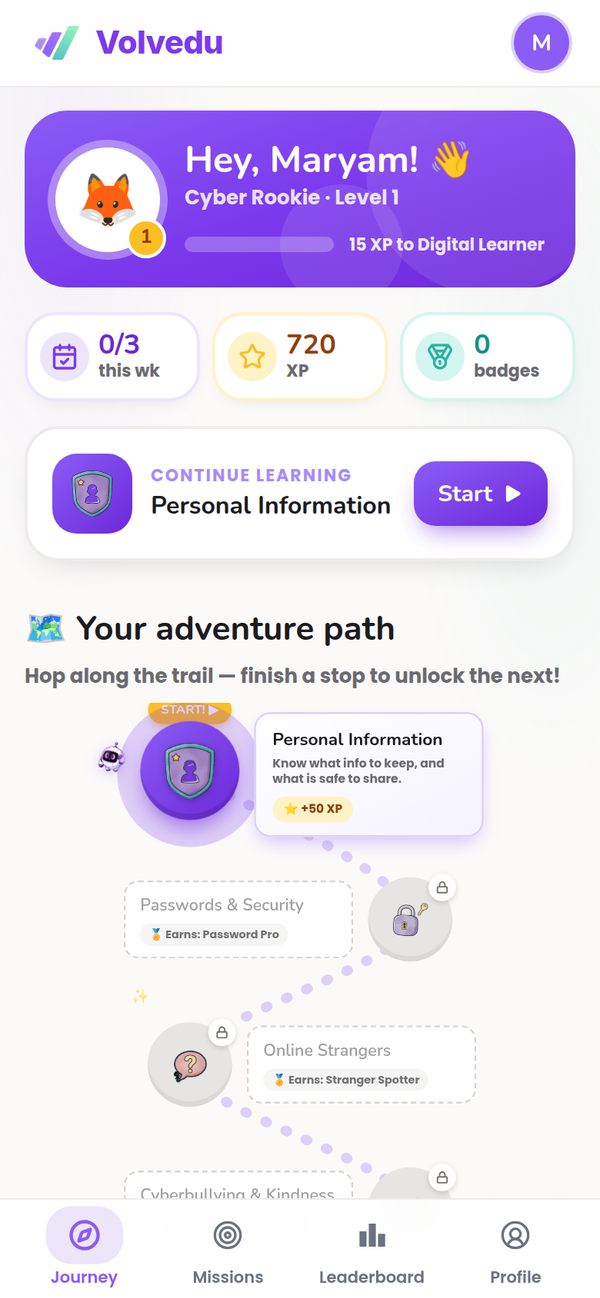
A gamified path through online safety & wellbeing topics — students earn XP and unlock badges as they progress.
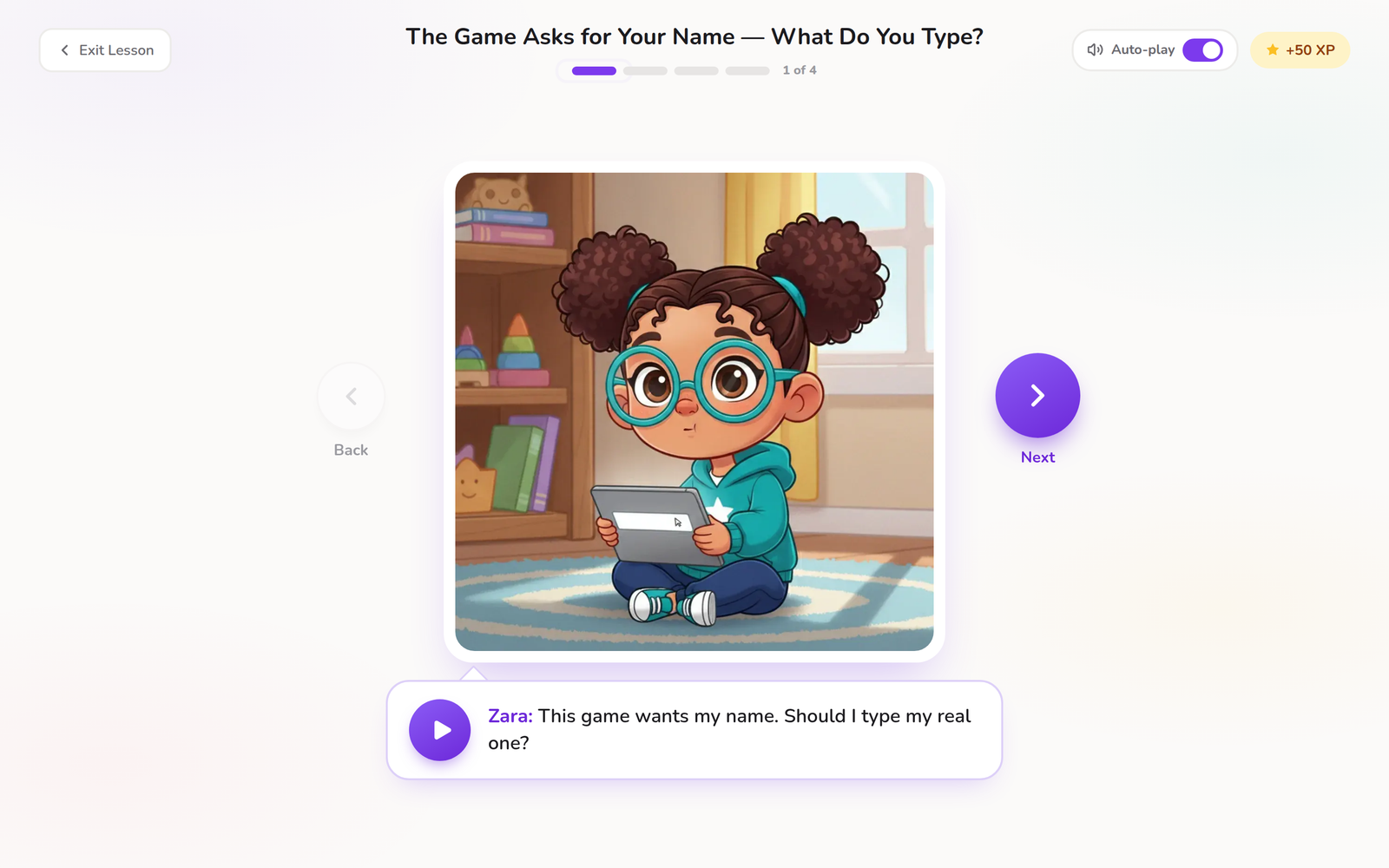
Comic Lessons
Illustrated stories with voice narration that teach safety through relatable, real-world scenarios.
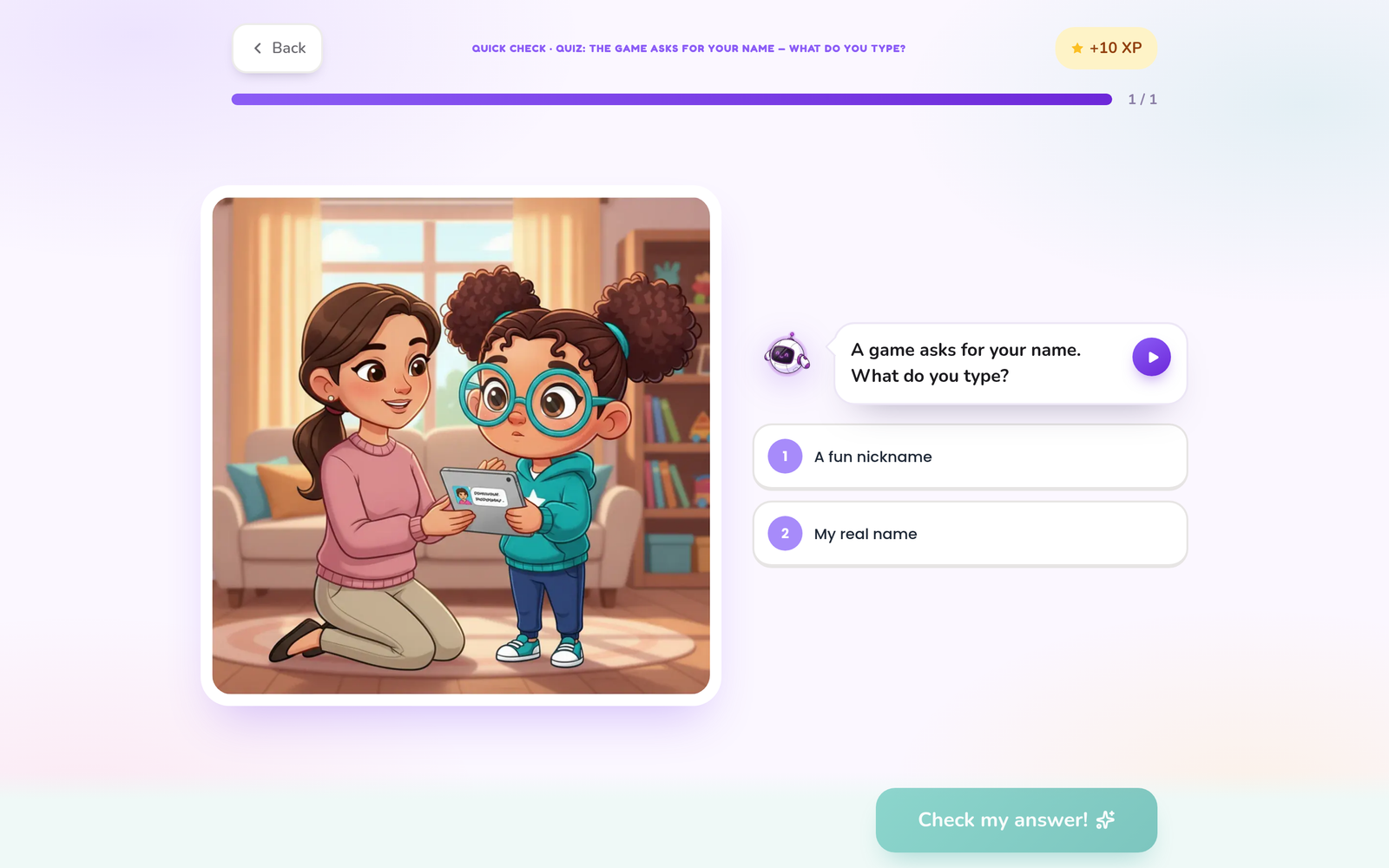
Scenario Quizzes
Questions built on the scene students just read, testing real decisions rather than recall.
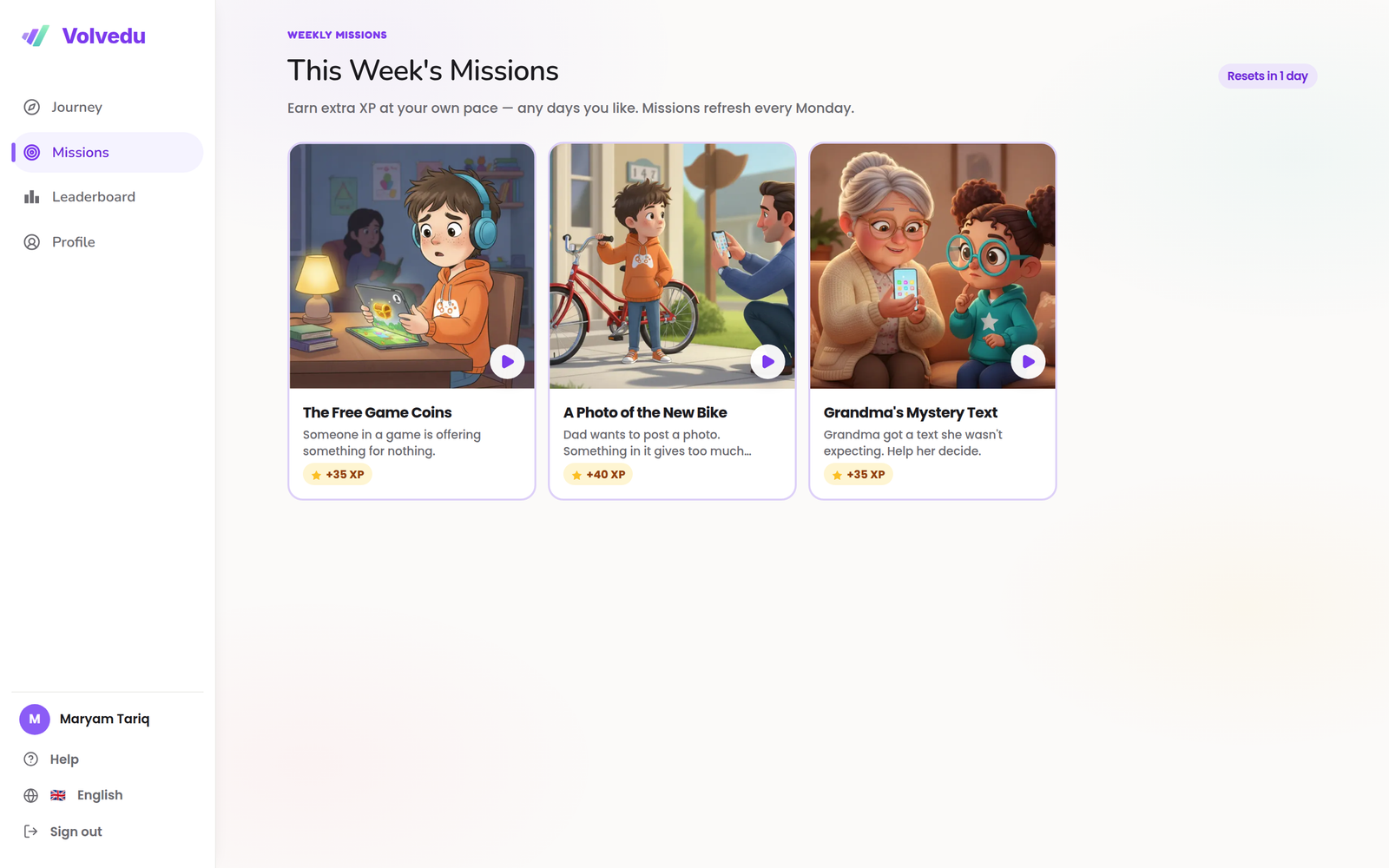
Missions
Short scenario challenges that open as students finish courses, plus missions the teacher sends to the class.
One app, every screen
Laptops, Chromebooks, iPads, Android tablets and phones. The layout adapts to the screen — there is no separate app to install or update.
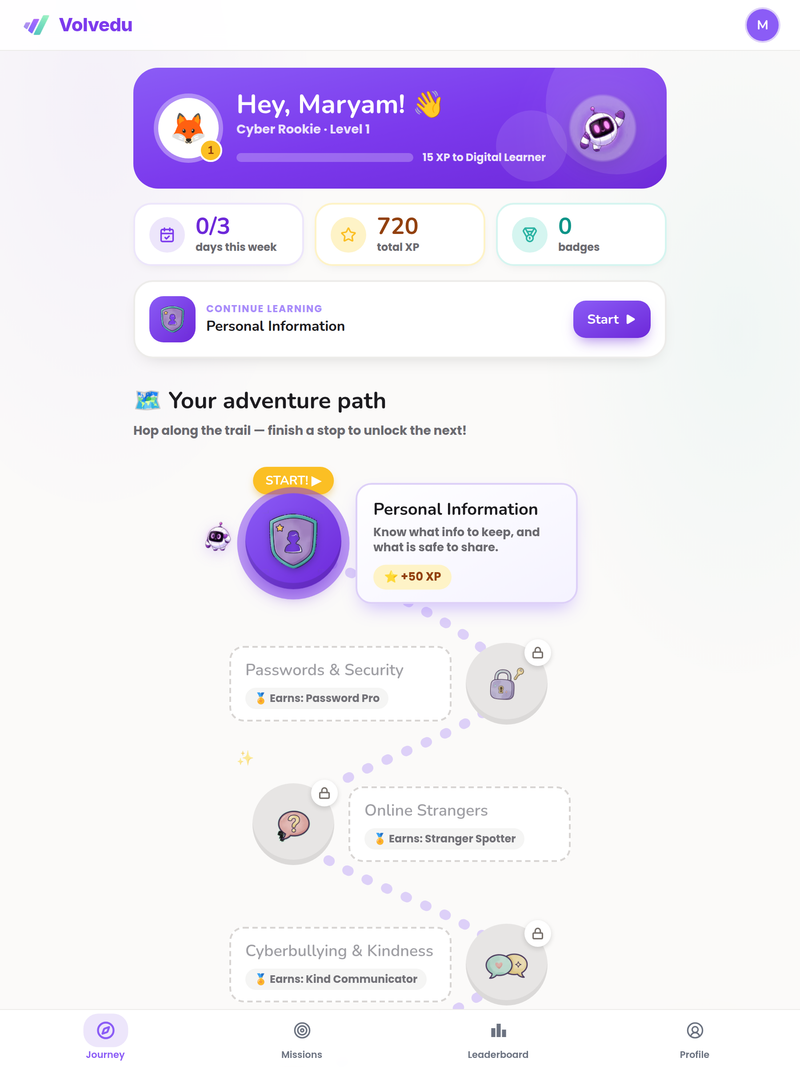
Same account, same progress, whichever device gets picked up.
Built for students. Safe by design.
Student safety, data privacy, and digital wellbeing are at the core of everything we build.
No Ads, Ever
Volvedu has no advertising. Students never see an ad on the platform.
No Data Selling
We collect only what learning needs. We never sell personal data or share it for advertising.
Private by Design
Built from the ground up around children's privacy: we collect the minimum learning needs, show no ads, and students join without personal email addresses.
School Oversight
Full transparency into what students learn, how they progress, and which topics they've mastered — visible to teachers and administrators.
Frequently Asked Questions
What should an online safety curriculum for schools cover?
A comprehensive online safety and digital citizenship curriculum should cover: password security, personal information protection, online stranger awareness, scam recognition, cyberbullying prevention, safe communication, device safety, digital footprint management, critical thinking about online content, screen time and digital balance, in-app purchases, and AI literacy. Volvedu’s curriculum is built around these 14 topics, taught through age-adapted, scenario-based micro-lessons for children aged 6-12, with new courses added each term.
How can schools prevent cyberbullying?
According to WHO (2024), 1 in 6 school-aged children has experienced cyberbullying, up from 1 in 8 in 2018. Schools can prevent cyberbullying through structured education programs that teach children to recognize bullying behavior, respond safely, and foster empathy online. A UNICEF study found that 1 in 5 young people have skipped school due to cyberbullying, making prevention a direct educational priority.
Do teachers need training to use an online safety program like Volvedu?
No. Volvedu is designed so students self-guide through scenario-based lessons and interactive quizzes, while teachers monitor progress through a dashboard. Each lesson takes a few minutes and fits into any timetable — during IT class, library time, or as independent learning. No teacher training or preparation is required.
Is Volvedu available in Arabic?
Yes. Volvedu is one of the only structured online safety and cyber safety curricula available in both English and Arabic.
What age group is Volvedu designed for?
Volvedu serves children aged 6–12, with content that adapts to the age group you assign. Younger children start with foundational concepts like safe device use and recognizing trusted adults, while older students tackle more complex topics like digital footprint, cyberbullying, and AI literacy.
How does Volvedu protect student data and privacy?
Volvedu collects only what learning needs, and pupils join without an email address. We never sell personal data or share it for advertising, and the platform has no ads. A few service providers help us run Volvedu (hosting, database and email) and process data only on our instructions. The privacy policy lists them and explains what we collect.
Book a Demo
Whether you represent a school, a school group, an education authority or another organisation, we'd love to hear from you. We'll get back to you within 24 hours.